Ask how hot a sauna should be and the answer depends on which kind you are sitting in. A Finnish sauna, an infrared cabin, and a steam room all run at very different temperatures. The number on the dial only makes sense once you know what type of heat it measures.
Key takeaways - A Finnish sauna typically runs at 70 to 100 degrees Celsius, with humidity rising when water meets the stones. - An infrared cabin typically runs at 40 to 60 degrees Celsius, warming the body directly while the air stays cooler. - A steam room typically runs at 40 to 50 degrees Celsius at near-total humidity, so it feels hotter than the number suggests. - The top bench often runs 10 to 15 degrees Celsius hotter than the lower bench, so where you sit matters as much as the thermostat. - Start low and add heat gradually across sessions, not within one sitting.
Why One Number Never Answers the Question
A sauna temperature reading measures the air at one point in the room, usually near head height opposite the heater. It does not measure how hot your skin gets. Two rooms set to the same number can feel very different, because humidity, bench height, and the way heat reaches your body all shape the experience.
The three common types illustrate the point. A traditional Finnish sauna heats the air, and the air heats you. An infrared cabin sends radiant heat straight to your body while the air stays comparatively cool. A steam room fills the air with moisture, and damp air transfers heat to skin faster than dry air. Our sauna heater guide explains how each heater type produces its heat.
Finnish Sauna: 70 to 100 Degrees Celsius
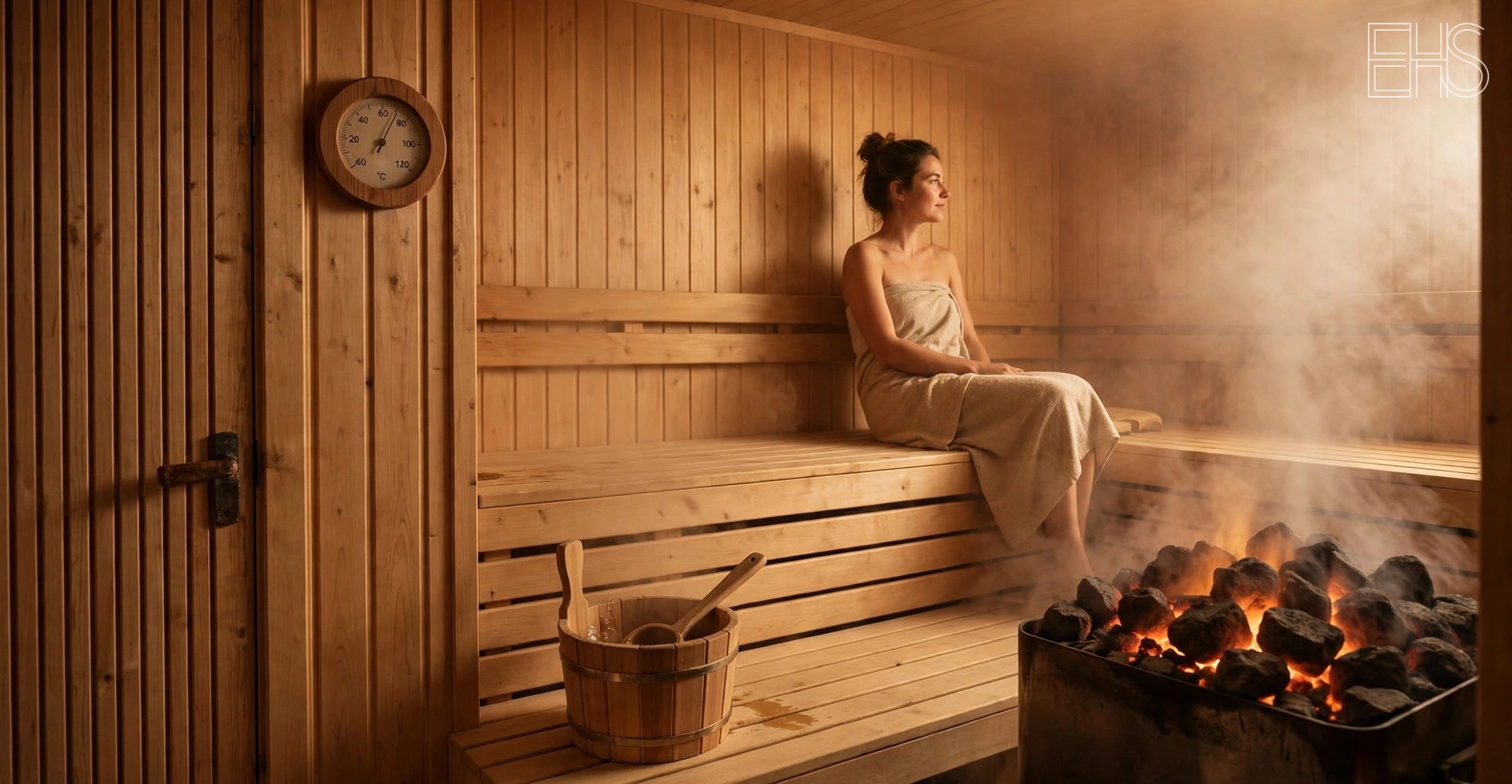
The Finnish sauna is the hottest of the three types. A typical session runs at 70 to 100 degrees Celsius (158 to 212 degrees Fahrenheit). Most regular users settle around 75 to 90 degrees, and treat the top of the range as a short, intense stretch rather than a whole session.
Humidity is low by default, often 10 to 20 percent. The heat arrives in waves: you sit in dry heat, ladle water onto the hot stones, and a burst of steam, called loyly in Finnish tradition, rolls across the room and fades after a minute or two. Our Finnish sauna traditions guide covers the bathing sequence behind it.
Bench height matters as much as the thermostat. Hot air rises, so the upper bench often runs 10 to 15 degrees Celsius hotter than the lower bench. Newcomers do well to start on the lower bench and move up only when it feels easy. A thermometer at head height reads the hottest air. An electric stone heater typically needs 30 to 45 minutes to bring a home cabin to temperature.
For a traditional outdoor cabin with an electric stone heater, look at the Zeno 2-Person Barrel Sauna from Renu Therapy (affiliate link), with list prices starting near $6,161. Verify current rates before buying. The KIP stone heater inside delivers dry heat or steam from the stones, and the barrel shape sheds rain and snow with no separate shelter needed.
Infrared Sauna: 40 to 60 Degrees Celsius
An infrared cabin runs cooler on the thermometer and warmer on the skin than newcomers expect. Sessions typically run at 40 to 60 degrees Celsius (104 to 140 degrees Fahrenheit), and most people feel the warmth within 10 to 15 minutes of switching the panels on. The air stays comparatively cool because the panels warm the body directly, not the room.
Spread matters more than wattage: heat from the back, the sides, and beneath the bench reaches the body more evenly than heat from behind alone. For panel layouts, see our infrared sauna buyers guide, and our low-EMF infrared sauna guide explains the low-EMF label. Most infrared cabins plug into a standard outlet and warm up in about 10 to 20 minutes.
Do not compare an infrared thermostat reading with a Finnish sauna setting. A cabin set to 55 degrees is near the top of its range; a Finnish sauna at 55 degrees has barely started. Judge the session by how your body feels after 10 minutes, not by the number.
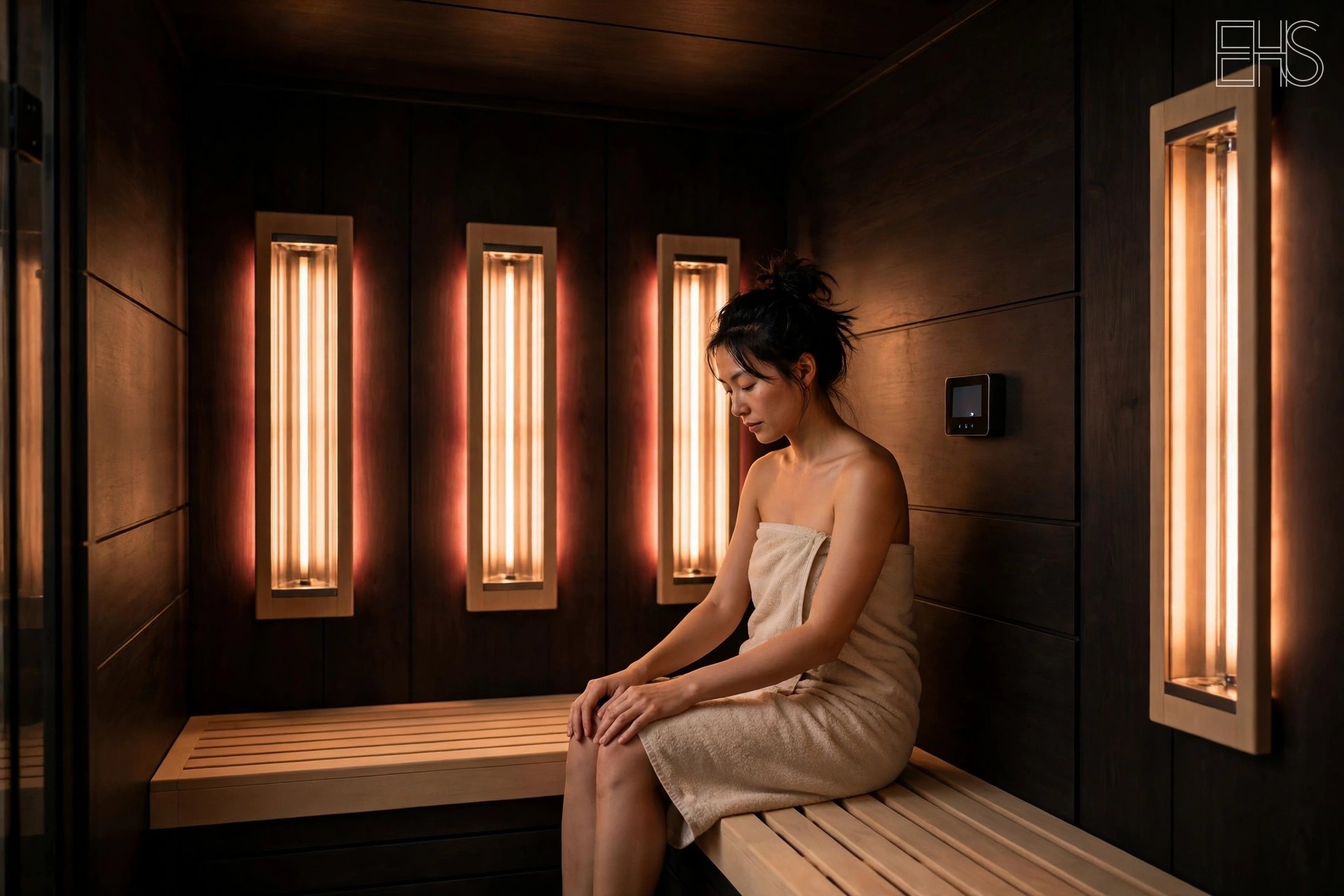
Illustration by EverHealthSpan
Steam Room: 40 to 50 Degrees Celsius, Near-Total Humidity
A steam room runs at the lowest air temperature of the three types and can feel the most intense. Typical sessions run at 40 to 50 degrees Celsius (104 to 122 degrees Fahrenheit), with humidity near 100 percent. The air is saturated and the walls are wet.
Humidity makes the low number deceptive. Damp air transfers heat to skin faster than dry air, so 45 degrees in a steam room feels substantially hotter than 45 degrees in a dry sauna. Sweat evaporates poorly in saturated air, so sessions feel heavy quickly. Sessions run shorter than in dry saunas: most people stay 10 to 15 minutes rather than 20 to 30. Our steam room versus sauna guide compares the two experiences side by side.
The Comparison
The table below puts the three types side by side. Treat the ranges as typical for home and public facilities in 2026: humidity and bench height shift the experience as much as the thermostat setting.
| Feature | Finnish sauna | Infrared cabin | Steam room |
|---|---|---|---|
| Typical air temperature | 70 to 100 degrees Celsius | 40 to 60 degrees Celsius | 40 to 50 degrees Celsius |
| Humidity | Low, 10 to 20 percent, rising with steam bursts | Room level, no steam | Near 100 percent |
| How heat reaches you | Hot air, then skin | Radiant panels | Moist air |
| Heat-up time | 30 to 45 minutes | 10 to 20 minutes | 10 to 15 minutes |
| Steam | Yes | No | Constant |
| Typical session length | 15 to 25 minutes | 20 to 30 minutes | 10 to 15 minutes |
| Feels like | Dry heat with waves of steam | Warm sunlight | Heavy damp heat |
| Best for | Ritual, steam, social bathing | Gentle heat, apartments, quick sessions | Moist heat, short sessions |
Temperature alone does not rank intensity. A steam room at 45 degrees can demand more from the body than a Finnish sauna at 80 degrees, because humidity changes how heat moves. Match the type to the feeling you want, then use that type's range as your starting point.
What Moves Your Right Temperature
Five factors shift the right setting, and they explain why two people in the same room often disagree about the heat.
First, bench height. In a traditional sauna, the upper bench can run 10 to 15 degrees Celsius hotter than the lower bench, so moving up or down adjusts faster than the thermostat. In an infrared cabin, height matters less, because the panels warm the body directly.
Second, humidity. A ladle of water on hot stones lifts the felt heat sharply for a minute or two, so add water in small amounts and wait between ladles. In a steam room, humidity is the whole design, so the only lever is time.
Third, session goal. A short, intense session at the top of the range suits a quick wind-down after a workout, while a longer session at the low end suits an unhurried evening. Our sauna ventilation guide covers the airflow and drying routine.
Fourth, experience. Regular users tolerate higher temperatures than newcomers, because the body adapts over weeks. Start at the low end of your type's range, then add five degrees at a time. For a compact traditional cabin with an electric stone heater, look at the Rusticus 2-Person Indoor Sauna from Renu Therapy (affiliate link), with list prices starting near $5,739. Verify current rates before buying.
Fifth, the room itself. A small cabin heats faster and holds temperature more evenly than a large one, and a glass door loses heat faster. Our sauna installation guide covers placement and insulation, and our two-person vs. four-person sauna guide explains how cabin volume changes heat-up time.
A Plain-English Safety Note
Sauna heat works for most people, but not everyone. A session lifts heart rate and core temperature, and hotter rooms ask more of the body, so keep first sessions short and build up gradually. Skip long sessions while pregnant, if your blood pressure runs high, or if you live with a heart condition. Step out at the first sign of dizziness or nausea. Do not sauna alone when you are new to it. Steam rooms add their own caution: the wet floor is slippery, and the saturated air makes it harder to notice how hot you are getting.
Frequently Asked Questions
What temperature should a first-time sauna user start at?
Start at the low end of the range for your sauna type. In a Finnish sauna, that means around 70 to 75 degrees on the lower bench. In an infrared cabin, start around 40 to 45 degrees. Keep the first few sessions to 10 minutes and step out as soon as you feel uncomfortable. Add heat gradually across sessions, not within one sitting.
Is 100 degrees Celsius too hot for a sauna?
It depends on the type and on you. In a Finnish sauna, 100 degrees Celsius is the top of the usual range: experienced regulars use it for short stretches and step out after a few minutes. In an infrared cabin, 100 degrees would be far beyond the normal range. Treat the top of any range as a place to visit briefly, not a target to hold.
Why does the top bench feel hotter than the bottom bench?
Hot air rises, so the air near the ceiling of a traditional sauna is substantially hotter than the air near the floor. In a two-tier cabin, the upper bench often runs 10 to 15 degrees Celsius hotter than the lower bench. The thermometer usually sits near head height on the upper bench, so it reads the hottest air in the room.
Can an infrared sauna feel hot at only 50 degrees Celsius?
Yes, and that is normal for the type. Infrared panels warm the body directly with radiant heat, so the air temperature is not the main source of warmth. A cabin set to 50 degrees Celsius can feel deeply warm after 10 minutes. Judging it by Finnish sauna numbers leads people to set it too high, so judge the session by how your body feels, not by the number.
Where should a sauna thermometer hang?
Hang it on the wall opposite the heater, at head height when seated on the upper bench, and away from the door and the steam vent. A thermometer hung low, near the door, or right beside the heater gives a misleading number: low readings understate the heat at the top bench, while a reading beside the heater overstates it.
What temperature should I set my home sauna to?
Set it to the low end of your type's range. For a traditional home cabin, start around 70 to 75 degrees Celsius and add five degrees at a time across sessions. For an infrared cabin, start around 45 degrees Celsius. Give the room time to soak before you step in. For a traditional cabin in this format, look at the Rusticus 4 Person Indoor Sauna from Renu Therapy (affiliate link), an electric stone heater with a thermostat, with list prices starting near $6,830. Verify current rates before buying.
This article is for informational purposes only and does not provide medical advice or guaranteed outcomes.