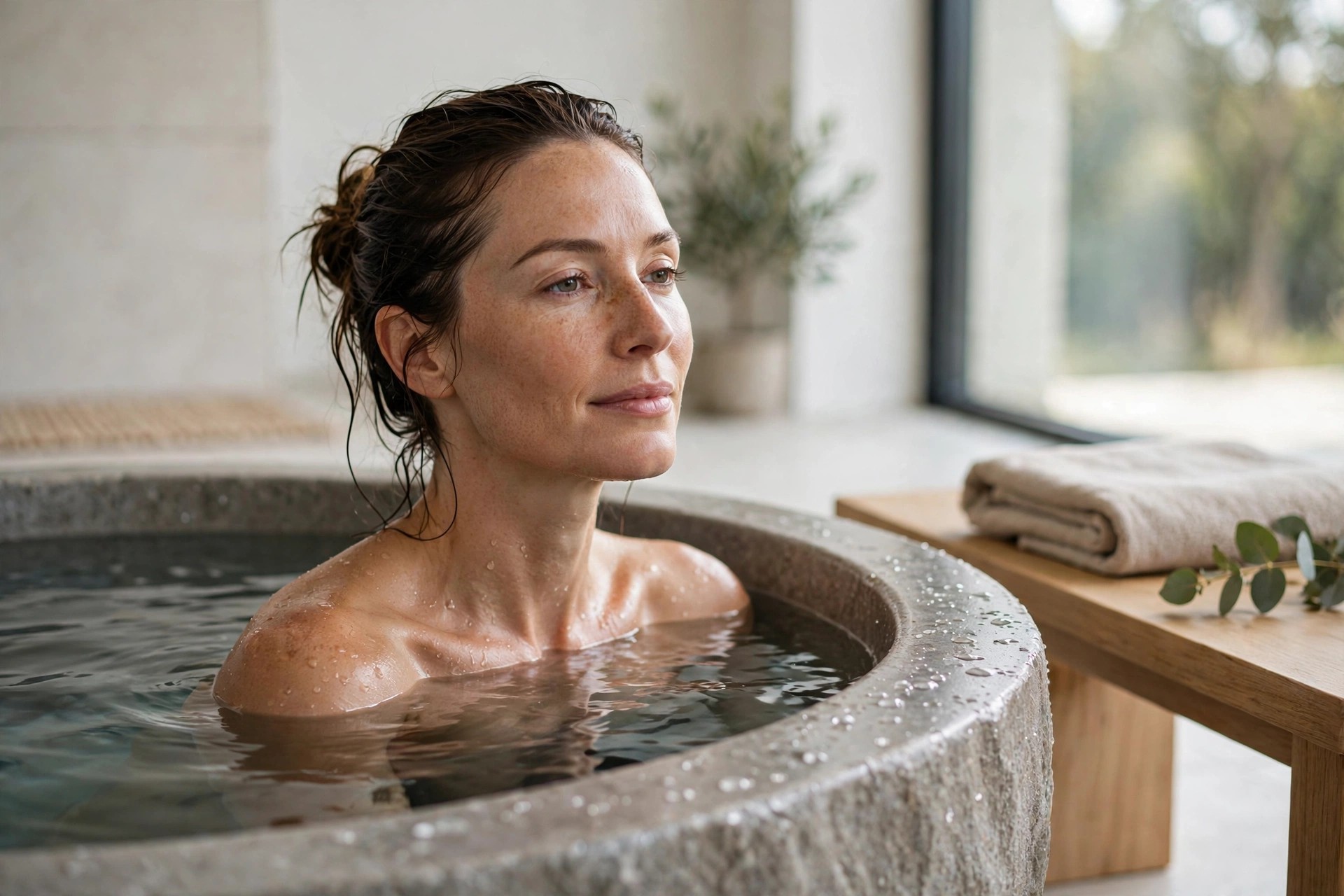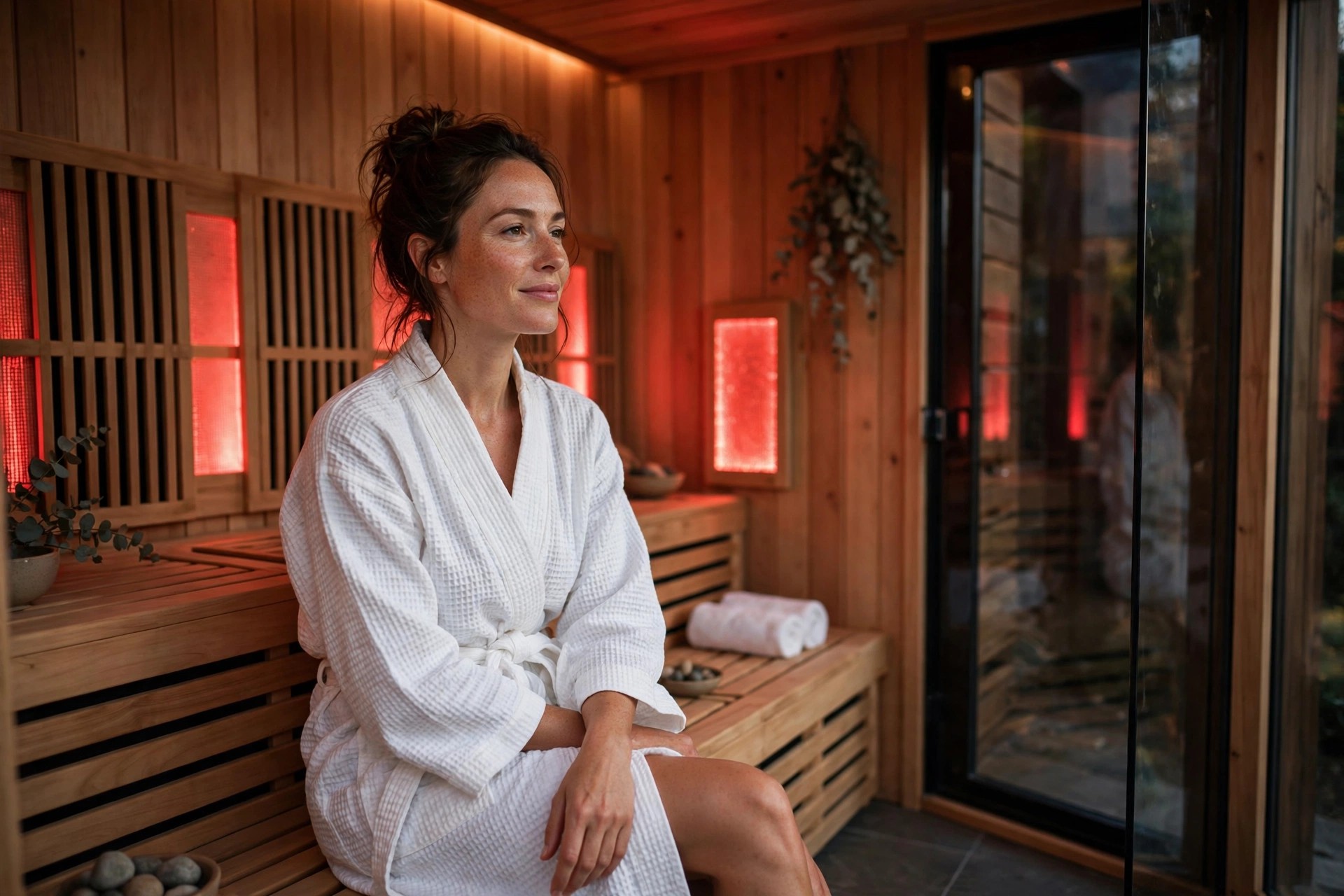
Cold plunge or sauna? It's the most common question in home wellness, and the honest answer is that they're profoundly different experiences that happen to share a shelf in the recovery aisle. One is three minutes of bracing intensity. The other is twenty minutes of slow, enveloping heat. Choosing between them — or deciding you want both — comes down to how you like to feel, what your space allows, and what you're actually trying to get out of the ritual.
This is the comparison we wish someone had handed us before spending the money.
The Experience, Honestly Described
What a cold plunge feels like
You lower yourself into water somewhere between 39°F and 55°F. The first thirty seconds are a full-body alarm bell — sharp breathing, racing heart, every instinct saying get out. Then, if you stay, something shifts: breathing steadies, the panic recedes, and a strange calm focus takes its place. You get out after two to five minutes feeling electric — alert, awake, slightly euphoric. The whole thing is over in under ten minutes including the towel-off.
Cold plunging is intense, brief, and energizing. People tend to do it in the morning or before workouts. It demands a certain appetite for discomfort, though most regulars will tell you the discomfort becomes the point — it's a daily exercise in doing the hard thing first.
What a sauna feels like
You sit in dry heat between 150°F and 195°F (or lower in an infrared sauna, more on that below). The warmth builds gradually. Muscles loosen. Breathing deepens. Thoughts slow down. Fifteen to twenty-five minutes later you emerge loose, heavy-limbed, and deeply relaxed — the physiological opposite of the plunge's jolt.
Sauna is slow, passive, and calming. People tend to do it in the evening or after workouts. Where the plunge is a confrontation, the sauna is a surrender.
What the Research Suggests
Both practices have real research behind them — and both have marketing that runs well ahead of it. Here's the sober version.
Cold-water immersion has decent evidence for short-term effects: reduced perceived muscle soreness after exercise, temporary alertness and mood lift (likely tied to norepinephrine release), and some suggestive evidence around immune markers. The long-term picture — does a daily plunge make you meaningfully healthier over years? — is genuinely unclear. Studies are small, short, and often done on athletes rather than regular people.
Sauna bathing has arguably the stronger evidence base, largely from long-term observational studies out of Finland, where sauna culture is centuries old. Frequent sauna use is associated with better cardiovascular markers and lower rates of certain conditions — but association isn't causation, and Finns who sauna frequently also tend to live active, socially connected lives. Randomized trials are fewer and shorter. The honest summary: promising, plausible, not proven.
Contrast therapy — alternating heat and cold — is popular and feels great, but the evidence for it outperforming either practice alone is thin. People do it because the experience is remarkable, which is a fine reason.
Neither practice has credible evidence for "detoxing" in the way marketers use the word. Your liver and kidneys handle detoxification; sweating out a fraction of trace substances doesn't move the needle meaningfully.
For a deeper look at what cold-immersion studies actually show, see our evidence review.
Cost Comparison
This is where the decision often gets made for you.
| Cold plunge | Traditional sauna | Infrared sauna | |
|---|---|---|---|
| Entry-level cost | $100–$500 (ice tub) | $2,000–$5,000 (kit) | $1,500–$4,000 |
| Serious home setup | $3,000–$8,000 | $5,000–$15,000+ | $3,000–$7,000 |
| Running costs | $20–$60/mo electric | $30–$80/mo electric | $15–$40/mo electric |
| Maintenance | Water/filter upkeep | Minimal (wood care) | Minimal |
| Install complexity | Low–medium | Medium–high | Low–medium |
Cold is the cheaper habit to start and the cheaper habit to run. Sauna is the bigger build — especially traditional saunas, which may need dedicated electrical work and ventilation planning.
Space and Installation
Cold plunge: A tub needs roughly a 4×4-foot footprint plus access. It can live in a garage, basement, patio, or backyard. All-in-one units need a standard outlet (some larger chillers want a dedicated circuit). Filled weight matters — a 100-gallon tub weighs over 800 pounds, so check what your floor or deck can hold.
Sauna: A two-person sauna needs roughly 4×6 feet, plus clearance. Traditional saunas often require 220V electrical service and benefit from ventilation planning — this is the one that most often needs an electrician. Infrared saunas typically run on standard 120V and are far simpler to place. Outdoor models need a level pad and weather protection.
If you rent, or expect to move within a few years, cold wins on practicality. A portable barrel moves in a car trunk. A sauna does not.
Maintenance Reality
Cold plunge: This is the ongoing tax on cold. Water needs changing or filtering, filters need replacing, and in warm climates the chiller runs daily. Budget 15–30 minutes a week plus filter costs. Skip maintenance and you'll know — the water tells you.
Sauna: Almost nothing. Wipe down benches occasionally, let it air out after sessions, treat the wood every year or two. Heaters last years. Infrared panels last longer still. This is the set-and-forget option.
Who Should Pick Which
Pick the cold plunge if: you want an energizing morning ritual; you're an athlete focused on post-training recovery; your budget is under $2,000; you rent or may move; you like intensity and the mental-toughness angle appeals to you.
Pick the sauna if: you want deep relaxation and better sleep; you have the space and budget for a bigger install; you prefer passive heat to active discomfort; low maintenance matters to you; evenings are when you have time for a ritual.
Consider both if: you have the space and budget, and the contrast experience appeals to you. Many dedicated home wellness setups pair a sauna with a plunge tub side by side — heat for twenty minutes, cold for three, repeat. It's the premium home-spa experience, and the two practices complement each other experientially even where the science is still catching up.
The Safety Notes Nobody Should Skip
Both practices stress the body deliberately — that's the mechanism. Both deserve respect.
Cold immersion causes an initial spike in heart rate and blood pressure. Saunas do the same through heat. People with cardiovascular conditions, uncontrolled high blood pressure, or other heart concerns should get medical clearance before either. Stay hydrated with sauna use. Never use either alone if you have any health concerns. Pregnant people should avoid both unless their doctor says otherwise. And alcohol plus extreme temperature — hot or cold — is a combination to skip entirely.
The Bottom Line
There isn't a winner here. Cold is cheaper, faster, more intense, and more demanding — of your body and your maintenance schedule. Sauna is costlier, slower, gentler, and nearly maintenance-free. The right choice is the one you'll actually use three to five times a week for years, because consistency is the only variable that reliably matters.
Still deciding on the cold side? Our cold plunge decision framework walks through budget, space, and setup step by step. Leaning toward heat? Start with our infrared sauna buyer's guide.
Frequently Asked Questions
Can I do both a sauna and a cold plunge in the same session?
Yes — this is contrast therapy, and it's widely practiced. The common pattern is heat first (15–20 minutes), then cold (2–5 minutes), sometimes repeated for two or three rounds, ending on cold. Take it easy the first few times; the combined cardiovascular load is greater than either alone.
Which is better for muscle recovery after workouts?
Cold-water immersion has more direct evidence for reducing perceived soreness in the 24–72 hours after intense exercise. Sauna's recovery evidence is more about relaxation and perceived well-being. Many athletes use cold immediately post-training and sauna on rest days. Neither replaces sleep, nutrition, or sensible programming.
Which burns more calories?
Sauna sessions raise heart rate and energy expenditure modestly — often compared to a brisk walk — but the "melt fat" marketing is overblown. Cold immersion activates brown fat and shivering thermogenesis, which also burns calories, but the amounts in typical plunge sessions are small. Neither is a weight-management strategy on its own.
Do I need to shower between sauna and plunge?
It's good practice. Rinsing off sweat before entering a plunge tub keeps the water cleaner much longer, which directly reduces your maintenance burden. Most contrast setups are arranged sauna → rinse → plunge for exactly this reason.
Which one is safer?
For healthy adults, both are generally considered low-risk when used sensibly. Both stress the cardiovascular system. The risks concentrate in the same groups: people with heart conditions, uncontrolled blood pressure, and anyone combining extreme temperatures with alcohol or dehydration. When in doubt, check with your doctor first.
If I can only afford one, which gives more value?
A mid-range cold plunge setup (chiller + tub, roughly $1,500–$3,000) delivers the full experience at a lower price than any serious sauna. If budget is the deciding factor, cold gives you more ritual per dollar. If the deciding factor is which experience you'll enjoy more — trust that instinct instead.
This article is for informational purposes only and is not medical advice. Consult a qualified professional before making health decisions.