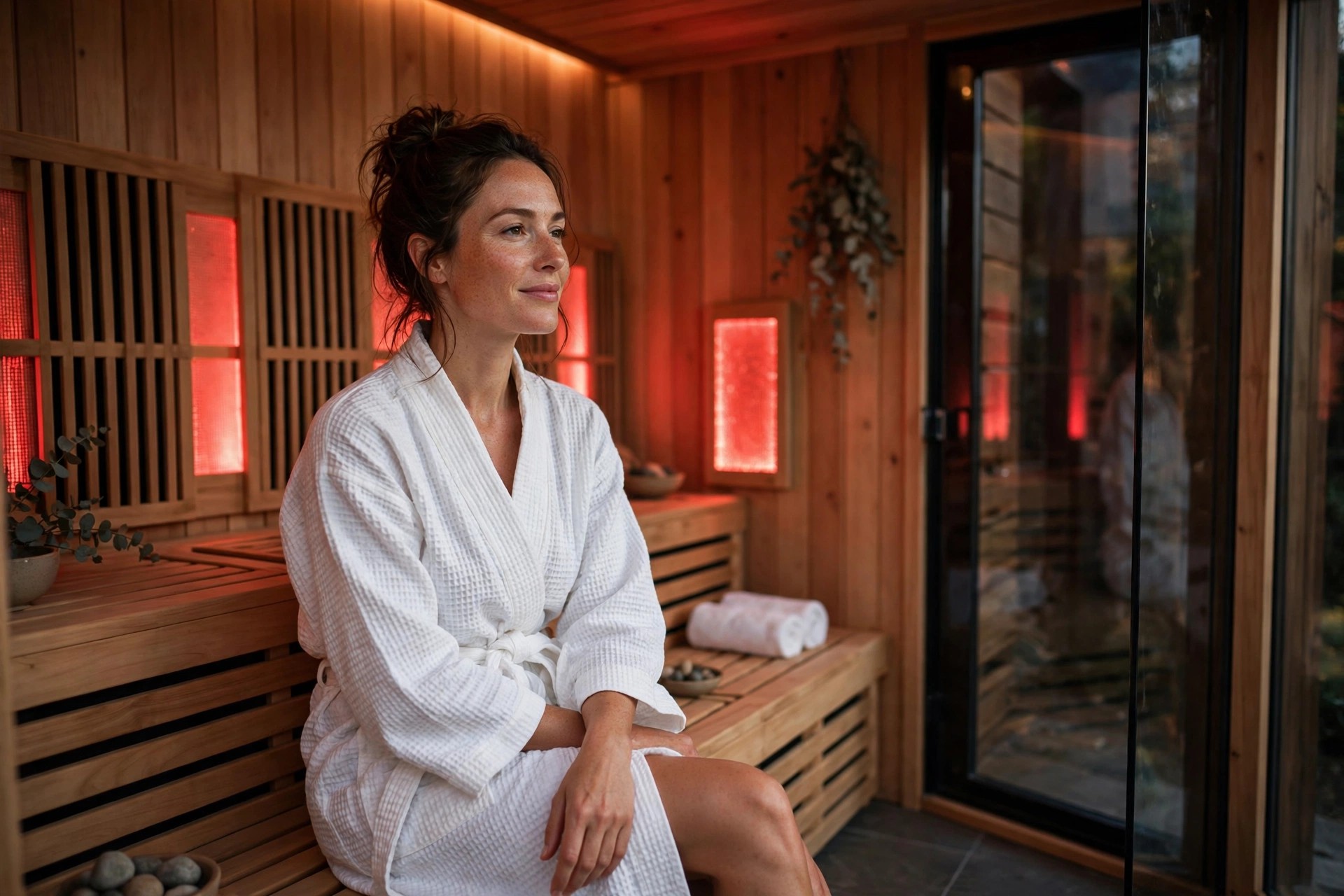
Few wellness purchases generate more confident opinions — and less useful comparison — than the infrared-versus-traditional sauna debate. Advocates on each side talk past each other: infrared fans cite convenience and gentle heat, traditionalists cite intensity and centuries of practice. Both are partly right, and the "winner" depends almost entirely on your space, budget, electrical situation, and what kind of heat experience you actually enjoy.
This is a practical comparison, not a verdict. By the end you'll know which type fits your home, your body, and your budget — and which marketing claims to ignore.
How Each One Heats You
The fundamental difference is the heating method.
Traditional saunas heat the air. An electric heater (or wood stove) warms the room to 150–195°F (65–90°C), and your body heats up from the surrounding hot air. Throwing water on the heated rocks creates a burst of steam — löyly — that spikes humidity and perceived heat. The experience is enveloping, intense, and variable: you control the intensity with water and ventilation.
Infrared saunas use radiant panels — typically carbon or ceramic emitters — that warm your body directly with infrared radiation while the air stays much cooler, usually 110–140°F (43–60°C). There's no steam, no rocks, and far less temperature swing. The heat feels like strong sunshine rather than a hot room.
Neither method is "more natural" or "more advanced" in any meaningful sense. They're different ways of delivering heat to a human body, and your body mostly cares about the resulting core temperature rise, not the delivery mechanism.
The Experience: What Each Feels Like
This is where the decision is really made, and it's subjective — which is exactly why you should weigh it heavily.
Traditional sauna feels like an event. The air is hot enough that breathing takes deliberate slow breaths. Your skin prickles, sweat pours within minutes, and the steam bursts are dramatic. Sessions run 15 to 25 minutes for most people because the intensity is self-limiting. It's also inherently social — traditional saunas are usually built for 2 to 6 people, and the culture around them (conversation, cooling off outside, repeat rounds) is half the appeal.
Infrared sauna feels like a long warm embrace. Breathing is easy, the heat builds gradually, and sessions comfortably run 30 to 45 minutes. Many people read or listen to podcasts inside. Sweating starts slower but becomes profuse. It's a more solitary, meditative experience — most infrared units seat 1 to 2 people, and the lower heat makes it feel less like a ritual and more like a warm room you happen to sweat in.
Try before you buy if you possibly can. Day spas, gyms, and wellness studios increasingly offer both. Thirty minutes in each will tell you more than any article. Some people discover they love the intensity of traditional heat; others discover it makes them anxious and they vastly prefer infrared's gentleness. Neither reaction is wrong.
Purchase Cost
| Infrared sauna | Traditional sauna | |
|---|---|---|
| Entry-level (1–2 person) | $1,500–$4,000 | $3,000–$6,000 (kit) |
| Mid-range (2–4 person) | $4,000–$8,000 | $6,000–$12,000 |
| Premium / custom | $8,000–$15,000+ | $12,000–$25,000+ (custom builds) |
Infrared units are cheaper at every tier, largely because they're simpler: panels, a wooden cabin, a basic controller. Traditional saunas need a more powerful heater, heavier-duty wiring, proper ventilation design, and more robust construction to handle the higher temperatures.
Watch for the hidden costs in both: delivery and assembly (these ship flat-packed and weigh hundreds of pounds), any needed electrical work, and flooring or outdoor foundation preparation. A "$2,500 sauna" can easily become a $4,000 project once installed.
Running Costs
Electricity is the main ongoing cost. Infrared units typically draw 1,500–3,000 watts; traditional heaters draw 4,500–9,000 watts. But wattage isn't the whole story — infrared sessions run longer (30–45 min vs. 15–25 min), which narrows the gap.
Rough real-world math at average US electricity rates (about $0.17/kWh): an infrared session costs roughly $0.25–$0.75; a traditional session costs roughly $0.75–$2.00. At 4 sessions per week, that's on the order of $50–$150 per year for infrared versus $150–$400 for traditional. Meaningful, but small compared to the purchase price — don't let running costs drive the decision unless your electricity rates are very high.
Maintenance is minimal for both. Wipe down benches, occasionally sand or treat the wood, replace infrared panels or heater elements if they fail after years of use. Budget essentially zero for the first several years with a quality unit.
Space and Installation
Infrared saunas are the easy install. Most 1–2 person units fit in a bedroom corner or large bathroom (roughly 4×4 feet footprint), assemble in a few hours with basic tools, and need no ventilation modifications. They're indoor-only in practice — the electronics and lower-grade wood of budget units don't handle weather.
Traditional saunas ask more of your space. They need ventilation (an intake near the heater, an exhaust high on the opposite wall), more clearance from walls, and ideally a floor drain or waterproof flooring nearby for the cooling-off routine. Outdoor traditional saunas are common and wonderful — but an outdoor install means a foundation or gravel pad, weatherproofing, and running power to the location.
If you're in an apartment or rental, infrared is usually the only realistic option. If you have a backyard and dream of the full ritual — sauna, cold plunge, repeat — traditional pairs beautifully with the outdoors. Our infrared sauna buyer's guide goes deeper on selecting a specific unit.
Electrical Requirements
This is the practical detail that surprises buyers most.
Infrared saunas typically run on a standard 120V/15–20A household circuit — the same as a regular outlet, though a dedicated circuit is recommended. Many owners plug into an existing outlet with no electrical work at all.
Traditional saunas almost always need 240V on a dedicated 30–50A circuit, professionally installed. That means hiring an electrician, possibly upgrading your panel if it's full, and running new wire to the sauna location. Budget $500–$2,000 for the electrical work depending on distance and panel capacity. This single requirement kills more traditional sauna plans than any other factor — check your panel before you fall in love with a unit.
Who Should Buy Which
Buy infrared if: you're in an apartment or rental; your electrical panel is full or you want to avoid electrician costs; you prefer gentler, longer sessions; you want the lowest purchase price; you'll mostly sauna solo; you want the simplest possible installation.
Buy traditional if: you love intense heat and the steam ritual; you have (or want) an outdoor setup; you sauna socially with family or friends; you have the electrical capacity or budget for the install; you value the centuries-deep tradition and the more "event-like" experience.
Consider both eventually if: you're building a dedicated wellness space. Many serious home setups end up with a traditional sauna outdoors and use it as the anchor of a contrast routine with a cold plunge — see our contrast therapy guide and our cold-versus-sauna comparison for how the pieces fit together.
A Note on Health Claims
You'll encounter bold claims for both types — detoxification, weight loss, immune "boosting," and more. Treat the marketing with the same skepticism regardless of which side makes it. The honest evidence picture is similar for both: heat exposure is associated with cardiovascular and relaxation benefits in observational research, but most dramatic claims outrun the data. We've graded the sauna evidence claim by claim in our sauna benefits evidence review — worth reading before any health claim influences your purchase.
Neither type has a meaningful evidence edge over the other for health outcomes. The research doesn't support "infrared penetrates deeper so it's healthier" or "only real 190°F heat counts." Buy for the experience you'll actually use several times a week, because consistency is the only variable the evidence clearly rewards.
Frequently Asked Questions
Which type gets hotter?
Traditional saunas, by a wide margin — 150–195°F air temperature versus 110–140°F in infrared. But "hotter air" doesn't directly mean "more intense bodily heating." Infrared warms your body directly with radiant heat, so the physiological experience overlaps more than the air temperatures suggest. If you crave the feeling of truly hot air on your skin, only traditional delivers it.
Which is better for a small space?
Infrared, clearly. A 1–2 person infrared cabin fits in about 16 square feet, plugs into a standard outlet, and needs no ventilation work. Traditional saunas need more room, dedicated 240V power, and ventilation planning, which makes them impractical for most apartments and small homes.
Do infrared saunas need ventilation?
Not in the way traditional saunas do. Infrared cabins don't generate steam or extreme air temperatures, so they don't need dedicated intake/exhaust venting — the room's normal air exchange is sufficient. That said, any small enclosed space where people sweat heavily benefits from being aired out between sessions. Crack the door open afterward; that's usually enough.
Can I put a sauna outdoors?
Traditional saunas, yes — outdoor models are common and purpose-built for weather exposure, though you'll need a proper foundation and electrical run. Most infrared saunas are indoor-only; their electronics and thinner cabin construction don't handle moisture and temperature swings. A few manufacturers sell outdoor-rated infrared models, but they're the exception — verify the rating explicitly rather than assuming.
Which costs more to run?
Traditional saunas cost more per session — roughly 2 to 3 times the electricity of infrared, driven by the much more powerful heater. In absolute terms, though, both are cheap to run: on the order of $50–$150 per year for infrared versus $150–$400 for traditional at typical usage and US electricity rates. Purchase price and installation dwarf running costs in the total economics.
I'm a complete beginner. Which should I start with?
Infrared is the gentler on-ramp — easier breathing, lower temperatures, longer comfortable sessions, and simpler installation. But if you've tried both and the traditional experience excites you, don't talk yourself into infrared purely on practicality. The sauna you'll use four times a week beats the theoretically optimal one you use twice a month. Try both at a spa or gym first if you can.
This article is for informational purposes only and is not medical advice. Consult a qualified professional before making health decisions.